Showing posts with label cooking. Show all posts

Tuesday, October 26, 2010

Starting your own Herb Garden Part 5: Garlic, ginger, and other easy-to-grow herbs


Missed the rest of the series? Read them here: Starting your own Herb Garden: Part 1: The Benefits of Fresh Herbs, here: Starting your own Herb Garden Part 2: Planning and Layout, here: Starting your own Herb Garden Part 3: Seed Starting and Growing from Cuttings, and here: Starting your own Herb Garden Part 4: The Indoor/Potted Herb Garden.

Did you know that some of the most widely used and most delicious herbs are the easiest to grow? In this last of installment of the Starting Your Own Herb Garden series, we'll show you how to grow your own garlic, ginger, and cilantro.

Ginger
Ginger has loads of health benefits (just do a Google search and you'll come up with tons), so much so that many people take daily ginger in capsule form. I prefer it fresh or pickled, sushi style. Fresh grated ginger is fantastically useful for cooking, especially in Asian dishes, and it makes a lovely tea. It's also ridiculously easy to grow your own.

Note: This is ornamental ginger (comes it pink or red flowers). It's pretty but not edible. The edible kind is not pretty, doesn't flower at all, and is much smaller.


To grow your own, visit your local farmers' market after the last frost. I got mine from the local grocery and it grew fine, but I was lucky--much of the commercially grown ginger is treated so that it won't reproduce. Select a rhizome (this is what most people refer to as the ginger "root," but that's actually incorrect) at least 3 inches long and with at least two well-developed growth buds--little protrusions at the tip of a "finger" of the rhizome, kind of like eyes on a potato. The more growth buds your rhizome has, the better. If the tips of the "fingers" are greenish, even better.

A ginger rhizome with 7 fingers and many growth buds. This could produce up to 10 ginger plants.


Planting Ginger
If you're unsure whether your ginger rhizome has been treated with an growth retardant, soak it in a glass of water overnight before you plant it. What's cool about ginger is that if your rhizome has more than one "finger," you can cut them apart and plant each one separately to produce several ginger plants. The only rule is that each section you plant should be at least 2 inches long and have at least one growth bud.

Growing Ginger
You can grow your ginger in a pot with potting soil, like mine, or if you live in an area that never frosts, you can plant it directly in the ground, as long as the soil is well-drained and not too clayey. Ginger takes 8 to 10 months to mature and hates the cold, which is why you should opt for potting unless you live in an almost year-round warm climate. Plant your rhizome sections 6 to 8 inches apart and 1/2 inch deep, growth buds facing up. Water regularly, but don't soak them. Ginger hates having wet feet. After a few weeks (sometimes several), you'll see the first growth. It'll look like a thin green spike.

Ginger plant spike with first leaf

6 months later


Harvesting Ginger
Ginger is ready to harvest when the leaves turn yellow and begin to wilt, 8 to 10 months after planting. I recommend harvesting in the morning so the rhizomes have ample time to dry in the sun. To harvest, loosen the soil with a garden fork and lift the whole thing gently out of the ground. Brush as much of the dirt off the remaining rhizomes as you can and lay them in the sun for the rest of the day. At this point you can cut off a few sections of the rhizome with good growth nubs to replant for next year. Break up the rest and cut off any remaining stems.

Storing Ginger
There are three options I know of for quality long-term storage of ginger:
1. Keep unpeeled in a ziplock bag in your refrigerator's crisper (up to 2 months).
2. Scrape off the skin with the edge of a spoon, cut into 1-inch chunks, and store covered in vodka or rice wine (up to 1 year). The ginger won't lose its flavor, and you can use the leftover liquid in stir-fry dishes, salad dressings, or sauces. I've yet to make a ginger vodka martini, but I'd love to try it.
3. Pickle it by peeling as above, cutting into 1-inch chunks, and storing covered in rice vinegar for 3 weeks. Remove from liquid. Use the remaining liquid as above, and store the pickled ginger in the refrigerator up to 1 year.


Cilantro
Ordinary cilantro is also easy to grow and not too picky about its soil, as long as it's fairly loose and not too wet. It prefers shade or filtered sun, will grow in pots or right in the ground, and grows quickly. Five cilantro seeds will yield you quite a bit of cilantro in a month or two. Plant the seeds 4 to 6 inches apart and 1/2 inch deep. If planting outdoors, wait until it's relatively warm out to plant your seeds. They don't like the cold.

Cilantro, one week after planting seeds. If you want instant herb gratification, this is your plant.


Garlic
Garlic is another quick sprouter, though it takes longer to mature than cilantro.

Planting Garlic
Unless you're in a year-round warm climate, the best time to plant garlic is in mid-autumn. Buy a head from your local grocery or farmers' market and keep it in the fridge until you start to see little roots sticking out the bottom. Then separate the cloves and plant them in a sunny spot, root side down, 6 inches apart, and 2 inches deep. No need to peel off the skin. The soil should be loose and well-drained.

Growing Garlic
After a few days you'll see the shoot coming up. These will die down once it gets cold. When that happens, mulch well over the whole bed. Your job is done until spring. In the spring, remove the mulch. More shoots will appear and these will continue growing into leaves that look like onion leaves but flimsier. About a month before the garlic is ready to be harvested, they'll send up something called a scape. The scape looks like a thick, hard green onion, and it's edible. It tastes just like garlic but milder and you can cut it off to eat once it's about 4 inches long. If you let them keep growing, they'll get very tall and start curling like something out of a Tim Burton movie. Once they start to curl, they'll get tough and begin losing their flavor.

Garlic, two days after planting


Garlic, 1 week after planting


Harvesting Garlic
You'll know when your garlic is ready to harvest because its leaves will start to turn brown and wilt. As with the ginger, loosen the soil and carefully pull the whole thing up. Brush off the dirt and hang the whole thing in a cool, dry place for 2 to 3 weeks. They should be dry and not smell very strongly at this point. Cut off the foliage and peel off the outer layers of skin until it looks like something you'd see at the grocery store.
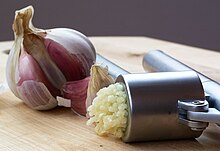


Storing Garlic
Do not seal your garlic bulbs in bags or airtight containers; this promotes molding and rotting. Garlic will keep in the fridge for 2 to 4 weeks, but the moisture level there is too high for it to keep long term. Garlic keeps longest in a cool, dry place, like in a terracotta jar or in the basement.


Growth update!
The habaneros still haven't germinated. I planted five seeds, 3 three weeks ago and 2 two weeks ago. Nada. I've heard they take as long as 2 months to germinate, so I'm not giving up yet. I'm keeping them in direct sun as much as possible to maximize warmth. Somebody I know said his didn't germinate until he started setting them on top of the clothes dryer every time he ran it.

The watermelon seedlings are growing, but not rapidly. We now have nine of them. No sign of the forget-me-nots germinating yet, but it's only been one week.

The basil and mint that I transplanted last week from the cuttings are flourishing, so I'm excited about that. I'm already dreaming of caprese salads.

Mint cutting transplant


Basil cutting transplants


Starting your own Herb Garden Part 5: Garlic, ginger, and other easy-to-grow herbsSocialTwist Tell-a-Friend

Tuesday, October 19, 2010

Starting your own Herb Garden Part 4: The Indoor/Potted Herb Garden


Missed the beginning of the series? Read them here: Starting your own Herb Garden: Part 1: The Benefits of Fresh Herbs, here: Starting your own Herb Garden Part 2: Planning and Layout, and here: Starting your own Herb Garden Part 3: Seed Starting and Growing from Cuttings

This week TAiMH will show you how to make a variety of beautiful recycled herb planters and get some ideas for creating your own unique indoor herb garden. It's time to get creative.

But first, an update on the seeds we planted last week in our totally recycled starter pots:

Yes, I confess these are watermelon seeds, not herbs. My herbs are already potted or planted. But you get the idea. It works.

8 out of 14 watermelon seeds (from farmer's market watermelon) germinated!

Also, I happened to buy a little ceramic elephant oil burner that came in this little clear plastic box. So instead of throwing away the packaging, I've recycled it into the perfect mini-greenhouse.

I planted habanero pepper seeds in these. They're notoriously hard to germinate. Cross your fingers for me.

Inside are more recycled starter pots, these ones made from styrofoam coffee cups. Starbucks espresso cups work well too, by the way. However, I certainly don't recommend buying disposable cups if you can bring your own travel mug for them to fill. MDT just happened to buy us surprise snacks at the fair last week, which came in these.

Recycled mini-greenhouse


Now that your little seeds have germinated, the next step is to pot them. Here are some ideas for creative recycled planters

Hack #1: Turn vegetable cans/tins into a matching set of planters for your indoor herb garden.

Materials
  • vegetable cans/tins (remember to poke holes in the bottom for drainage)
  • ribbon, buttons, bottle caps, bows, or any other little decorative, waterproof things you've got lying around
  • a hot glue gun (or at least some super glue)
  • Scotch tape
  • Sharpies

Possibilities:

I've been dying to do one covered in multicolored buttons, but I haven't collected enough yet.


Need more inspiration? How about these great recycled planters:

culantro (related to cilantro) in a broken concrete block

2 liter bottle herb garden from GreenScaper

Coffee can hanging planter, tutorial on Beach Petals

recycled windowsill herb garden, from Apartment Therapy


If you haven't got any suitable materials to recycle into planters, why not buy some cheap ceramic pots and paint/decorate them yourself? Fresh paint is also a great way to recycle an ugly old pot into a pretty one that matches your kitchen. ;)

Plain ceramic pot $1, painted with acrylics


Ready to transplant?

Transplanting Seedlings
When your herb seedlings are about 3-4 inches tall, they're ready to transplant into your new lovely planters. Fill your new planter to about an inch from the top with potting soil and make an indent in the center in which to place your seedling. Peel off the masking tape from around the starter pot, carefully remove the paper bottom, and place your seedling, paper towel roll and all into your new planter. Water lightly.

Transplanting cuttings
When your cutting has roots at least 4 inches long, you're ready to transplant it. Again, fill your new planter to about an inch from the top with potting soil and make an indent in the center in which to place your cutting. To ease the roots' transition from water to soil, make sure the soil in the pot is very wet. I do this by simply pouring a bunch of water right into the indent I've made for the cutting, and immediately inserting the cutting. Then add soil to fill the hole, and water again lightly.

Basil (transplanted from cutting) and Cat Grass (from seed)

More basil cut from the same parent plant and transplanted


Next week, join us for our final Starting Your Own Herb Garden installment where we'll show you how to grow garlic, ginger, and other herbs you can plant straight in the ground.


Starting your own Herb Garden Part 4: The Indoor/Potted Herb GardenSocialTwist Tell-a-Friend

Monday, September 27, 2010

Starting your own Herb Garden: Part 1


The Benefits of Fresh Herbs

There are so many benefits to growing your own herbs. You save money on store-bought fresh herbs, which tend to be overpriced, and home-grown always tastes better. Plus, with your own herb garden there's no realizing you don't have the spice you need halfway into cooking dinner. You just step outside and pick it! And, did you know that herbs are extremely good for you? According to the Nutrition Diva, ". . . ounce for ounce, fresh herbs like oregano, rosemary, parsley, and basil are among the most nutritious greens you can find." Besides vitamins and antioxidants, she adds that "herbs are also very rich in a wide range of disease-fighting phytochemicals. Almost all green herbs have potent anti-bacterial and anti-inflammatory properties." She also notes that, like fruits and vegetables, herbs are most potent and contain the most nutrients when they are freshly picked.

Some commonly used herbs and their benefits/uses

Basil: helps regulate blood pressure and prevent free-radical damage, antibacterial, anti-inflammatory

Chamomile: helps calm the nerves and promote sleep, anti-inflammatory, antibacterial, antifungal, and antiseptic

Cilantro: helps increase HDL cholesterol (the good kind) and reduce LDL cholesterol (the bad kind), promotes healthy liver function, helps reduce menstrual cramping, antibacterial, anti-inflammatory, antioxidant

Dill: helps neutralize carcinogens, high in calcium, antioxidant

Garlic: lowers cholesterol and blood sugar levels, helps prevent blood clots and cancerous tumors, fights bacterial, viral, and fungal infections, and supports healthy heart function

Ginger: lowers cholesterol, stimulates blood circulation, helps relieve indigestion and joint pain, used as an expectorant

Oregano: high in iron and manganese, protects against and fights dysentery and is especially effective against Giardia, one of the most common intestinal infections caused by water parasites

Parsley: high in iron, folic acid, and vitamins A and C, antioxidant, antibacterial, diuretic

Peppermint: helps calm muscle spasms and relieve headache, nausea, and menstrual cramps, and gastrointestinal upset; used as a cough suppressant and decongestant

Rosemary: helps kill bacteria that cause infection, improve digestion, and clear congestion, may help prevent Alzheimer's disease, antioxidant

Sage: helps reduce digestive problems, sore throat, premenstrual cramps, and even excessive perspiration; lowers blood sugar, antibacterial

Thyme: helps protect against age-related change in the brain, high in manganese, antimicrobial


Pretty amazing, right? Next week, we'll get started on helping you plan and plant your own herb garden. Stay tuned.


References
http://www.vitaminstuff.com/herbs.html
http://www.nutrition-and-you.com/cilantro.html
http://www.whfoods.com/genpage.php?tname=foodspice&dbid=100
http://www.whfoods.com/genpage.php?tname=foodspice&dbid=77
http://www.vitaminstuff.com/herbs-peppermint.html
http://nutritiondiva.quickanddirtytips.com/are-herbs-good-for-you.aspx


Starting your own Herb Garden: Part 1SocialTwist Tell-a-Friend

Sunday, June 27, 2010

Recipe: Enchiladas that taste better than the ones you get at restaurants


We haven't posted a recipe in a while, so here's a most delicious one that's supremely easy and quick.

Ingredients
1 pack of whole wheat tortillas
2-3 green onions, finely chopped
2 cans fat-free refried beans
1 can of diced tomatoes OR 3-4 medium tomatoes, diced
1-2 jalapeño peppers, finely choppe
1 can enchilada sauce
1 bag shredded reduced-fat Mexican cheese
large handful of fresh cilantro, finely chopped


Preface
In my opinion, the enchilada sauce in the most important ingredients. Enchiladas are just not enchiladas without the sauce. Do not attempt this recipe without it. I find it difficult to make my own that has the right taste and super-smooth liquid texture, which is why I use the (delicious) stuff in a can, but if you can do it, go for it (and send me your recipe!)


Directions
  1. Heat the beans in a pan just until warm and soft.
  2. Line an oven dish with aluminum foil and preheat your oven to 350.
  3. One by one, prepare your enchiladas side by side in the oven dish, making sure to place them snugly; this will help hold the tortillas in place so that they don't unfold. Spread refried beans down the middle of a tortilla. Follow with a spoonful of enchilada sauce, a scoop of diced tomatoes, a sprinkle of green onions, and a sprinkle of cheese. Roll tortilla closed and repeat to make the next one.
  4. When all the enchiladas are made and in the oven dish, pour the enchilada sauce generously over the whole lot and sprinkle cilantro and cheese on top of the sauce.
  5. Bake for 10 minutes or until the cheese on top is melted.

Serving Suggestions
Try these accompanied by rice, salad, and fried plantains.


Recipe: Enchiladas that taste better than the ones you get at restaurantsSocialTwist Tell-a-Friend

Monday, December 28, 2009

No-Bake Cookie Twofer: Oatmeal Dark Chocolate Cookies and Coconut Bon-Bons


Plateful of Christmas CookiesImage via Wikipedia

I hate to cook, but I quite like to bake. This really doesn't work out well for me because we don't have an oven here in Costa Rica. What's a girl to do for delicious baked goods during the holidays without an oven? Buy them at the local bakery? Nope. The bakeries here don't make anything good (in my opinion) besides doughnuts and whole cakes; everything else is dry and brittle, full of hydrogenated oils (trans fats), and/or tasteless. Costa Ricans also seem to be generally confused about chocolate; for some reason they think it's supposed to be made with shortening and have no taste of cocoa whatsoever. The result is much like the oily and rubber-like "icing" top on a Hostess cupcake. No thank you.

My solution to the no-oven dilemma? No-bake cookies! That's right, cookies made entirely on the stovetop. Quick, easy, delicious.

These first cookies, I'll admit, don't look that great, but they *do* taste good. A variation that I tried with half the batch is to roll them into balls instead of just plopping them onto the wax paper. Let them chill in the fridge an hour or two and then roll them in powdered sugar, so they end up looking like doughnut holes. The result is a much prettier, still tasty cookie that looks nice when paired with the bon-bons in the following recipe. Almost like I planned them to go together.

Dark Chocolate Oatmeal Cookies

Ingredients
2 cups sugar
1 stick butter (1/2 cup)
1/2 cup evaporated milk
1 tsp vanilla
2 1/2 Tbs cocoa
1/2 cup peanut butter (optional but recommended)
3 cups rolled oats (or sub rice krispies cereal)
1 cup powdered sugar (optional)


Directions
  1. Combine all ingredients except peanut butter and oats in an medium-size pot and cook over medium heat. Bring to a boil.
  2. Let boil for about 5 minutes, stirring constantly.
  3. Remove from heat and stir in peanut butter and oats.
  4. Spoon out quickly onto wax paper or aluminum foil.
  5. (optional) Refrigerate for 20 minutes to an hour, then roll into balls and coat with powdered sugar.
  6. Cookies will harden as they set.


Coconut Bon-Bons

Ingredients
1 (15 ounce) can sweetened condensed milk
1/2 cup butter margarine
2 1/2 cups sugar (powdered works best, but either will do.)
1 (12 ounce) package shredded coconut
1 cup cocoa powder
1/2 cup whole milk/cream/condensed milk
1 cup crumbled or ground peanuts

Directions
  1. Mix together condensed milk, butter, 2 cups sugar, and coconut. Cover with wax paper and chill for 24 hours.
  2. In medium-sized saucepan, combine cocoa powder, milk, and remaining 1/2 cup sugar. Bring to a boil, stirring constantly. Remove from heat and let cool 20 minutes.


  3. Roll coconut mixture into 3/4-inch balls and dip into chocolate.
  4. (optional) Roll in nuts.
  5. Place on wax paper to cool and dry.


Serving suggestion: Ever had frozen bon-bons? These are better; I guarantee it. Freeze them. You'll thank me. There's a reason there's only 1 left.


No-Bake Cookie Twofer: Oatmeal Dark Chocolate Cookies and Coconut Bon-BonsSocialTwist Tell-a-Friend

Tuesday, October 27, 2009

Homemade Pico de Gallo with Garden Tomatoes


We can't help reiterating that one of the best ways to save money is to make your own food. It's almost always fresher, healthier, and tastier this way.

Take my salsa recipe. We were able to pluck nearly all of the major ingredients from our summer garden—the tomatoes, cilantro, and habaneros. Yes, the onion, lime, garlic, salt, and black pepper were store-bought, but these come cheap. So in a sense we only paid a pittance for about a liter of deliciousness.

Try out this recipe, but also experiment. Add your own ingredients like chipotles, mangoes, etc., if you wish to create your own flavors. Let us know about your recipe in a comment below.


Homemade Pico de Gallo

6 medium red tomatoes
6 medium yellow tomatoes
1 1/2 medium white onions
1/2 medium orange habanero (substitute: 1 Tablespoon cayenne)
1/2 cup cilantro
2 cloves garlic
1 lime, or to taste
salt, pepper to taste

1. Chop all ingredients and throw in a large mixing bowl. Chop garlic and especially the habanero super-finely.
2. Add the juice of one lime, salt, and pepper to taste.
3. Refrigerate for at least an hour before eating for flavors to blend.

You'll never want to buy any of that jarred stuff again.


This recipe was included in the Carnival of Gluten-Free Recipes and the Carnival of Savings.


Homemade Pico de Gallo with Garden TomatoesSocialTwist Tell-a-Friend

Wednesday, October 14, 2009

Another delicious fall drink recipe: Best Hot Buttered (Rum) Cider Recipe Ever


apple pics 227Image by podchef via Flickr

Clearly, I'm on an autumn-inspired beverage kick. All this rainy, dreary, Midwest fall weather is making me want to do nothing more than curl up in a cozy window seat and read a good book whilst sipping a toasty, possibly alcohol-infused, beverage. Pip, pip!

Apparently, it also makes me think I'm British. But on with the recipe!


Best Ever Hot Buttered (Rum) Cider

Ingredients:
1 64 oz. bottle of apple juice (or apple cider)
1/2 cup brown sugar
1 tsp ground cinnamon (or 4 cinnamon sticks)
1/2 tsp ground nutmeg
6" square of cheesecloth (or a coffee filter)
6 whole cloves
1/2 tsp. allspice AND 1/2 tsp ground nutmeg (or just 1 tsp. pumpkin pie spice)
1/2 tsp. vanilla (imitation works just fine)
a bit of lemon peel (do not substitute lemon juice)
1 cup rum (optional; I prefer dark or spiced rum for this recipe)
1 Tbs butter (or butter substitute)

Combine juice/cider, brown sugar, vanilla, and rum in large pot over high heat. Combine spices and lemon peel in cheesecloth or coffee filter, and secure with a bit of clean string or a twist tie.
Drop sachet in pot and heat to boiling.


Reduce heat and simmer for 15 min. Remove sachet.


Pour cider into mugs and top each with a thin slice of butter. Serve immediately.

Did you try this recipe? Leave us a comment and let us know what you think!
Got a cider recipe you think is better? Share it with us. (We dare you.)
Reblog this post [with Zemanta]


Another delicious fall drink recipe: Best Hot Buttered (Rum) Cider Recipe EverSocialTwist Tell-a-Friend

Thursday, October 8, 2009

Autumn is in full swing!


And so it's time to say goodbye to the goldfish. Too many leaves are falling into the pond for me to keep up with. I must have skimmed half a tree out of there in the past two days.

So this afternoon, we threw on the cover. You can get netting like this either a.) in a pack labeled "Pond Net" with some useless plastic stakes for $15 or b.) bulk from a hardware or home and garden supply store for $4. Guess which we chose?

I hope the cover lasts until winter. The fish have already started eating less because of the cold weather. Pretty soon they'll be little fishsicles. It's always amazed me how they survive winter living in a block of ice with no food. Very strange. Fishy hibernation I guess.

MDT and I also made caramel apples this week. Delish. At the grocery, we looked at the Happy Apple brand premade caramel apples, but every variety we saw contained trans-fats (hydrogenated oils)! Ridiculous. Plus, at the cheapest they were $1 a piece. Also ridiculous. So we bought a kit that included popsicle sticks and a packet a caramel mix for less than $2 and a bag of Jonathan apples.

It was much more fun making our own than just buying them, anyway. All we had to add to the mix was 2 cups of sugar and some water.

Dip chilled apples, set on wax paper or parchment paper in fridge for 20 minutes, and voila!


The best part about these apples is that the caramel isn't hard and grainy; it's soft and creamy.

Total cost for ten homemade caramel apples: $4.70. Total cost for ten store-bought trans-fatty caramel apples: $10. It's all about the little everyday choices, folks.

As an added bonus recipe, try out my spur-of-the-moment caramel mocha, made with a bit of leftover caramel, spooned straight from the pot

Caramel mocha (or macchiato, if you prefer)

Ingredients:
1 cup brewed coffee (or espresso) of your choice
1 teaspoon warm caramel
1/2 teaspoon chocolate/cocoa powder/chocolate syrup

Add chocolate/cocoa to coffee and stir. Then add caramel and stir again. Sprinkle with a bit of cocoa powder, powdered sugar, or cinnamon. The caramel adds enough sugar that cocoa powder works just fine. Or pop in a square of Hershey bar or a few chocolate chips for some super sweetness. Whatever you've got around. That's how we roll.


Thanks to Yes, I Am Cheap for including this post in the Festival of Frugality #199, to Gotta Little Space for including this post in the Make It From Scratch Carnival, and to Focus Organic for including this post in the All Things Eco Carnival.


Autumn is in full swing!SocialTwist Tell-a-Friend

Tuesday, September 29, 2009

Homemade Veggie Burgers—Mexican Style


Last month I posted my recipe for Homemade Indian-Style Veggie Burgers, and I must say that they were a hit. Well, I thought I'd share another recipe for veggie burgers. It's easy, delicious, and as with my previous recipe, you can make a large batch of these burgers and freeze them for future use.

Frozen burgers cooking on skillet.

Best of all, you'll save quite a bit of money by avoiding pricey brands like Gardenburger, BOCA Burger, Morningstar, and the rest.

The key is to buy as many of the following ingredients in bulk as possible and to reuse containers when doing so. This way you'll reduce the cost to your bank account and to the environment by avoiding unnecessary packaging.

On to the recipe.

Homemade Mexican-Style Black Bean & Lentil Burgers
makes about 16 burgers

6 oz. black beans (dry)
6 oz. lentils (dry)
1/2 small onion
3 garlic cloves
2 jalapeno peppers (substitute: 1 Tb. cayenne)
1/4 cup chopped cilantro
2 tsp. chili powder
2 tsp. salt
1 tsp. pepper
2 beaten eggs
1 cup bread crumbs

1. Prepare beans and lentils.
2. Allow beans and lentils to cool.
3. Mash together.
4. Chop onion, garlic, jalapenos, and cilantro.
5. Mix all ingredients in large bowl.
6. Add more bread crumbs, if necessary, until desired consistency.
7. Roll mixture into balls, and press into patties.
8. Cook on greased skillet 5–8 min.

If you plan to freeze the burgers, make sure you double layer the wax paper in between. This will keep them from sticking together—you don't want to have to pry them apart!


Do you know of a delicious recipe to share, one that will save some cash? Please let us know in a comment.

This post is part of Pennywise Platter Thursday at The Nourishing Gourmet and the October Fest Carnival of Super Foods: Beans and Legumes Recipes at Kitchen Stewardship.


Homemade Veggie Burgers—Mexican StyleSocialTwist Tell-a-Friend

Saturday, September 19, 2009

End of the Season Garden Wrap-Up


It's nearly fall, and the garden is winding down. We've still got a ton of tomatoes growing, but the watermelons and cucumbers are finished, and the bean, bell pepper, and swiss chard production has died down. The carrots are nearly ready also—maybe next week.

I haven't been very good about photographing every harvest, and that would get tedious anyway, but just to give an idea of the amount of produce from our little garden, here are some photos of just one harvest:

Habaneros.

Green beans: In total, we've probably gotten about five times this much, even though only five of the seeds we planted sprouted.

Total cucumbers: twenty-seven, and most were quite a good size.

I lost count of the tomatoes. Definitely over seventy-five, and they're still coming. No matter how many we eat and give away, they are constantly covering the windowsills. I'd never grown yellow tomatoes before, but they're delicious, just a tad sweeter than our usual red ones.

Here's the holy family watching over the tomato flock.

And some more in the fridge.

Swiss chard cooks down an incredible amount, so even a giant bunch is really only enough for one meal (for two to three people, in our case). We've harvested three large bunches so far and they're still growing nicely. Hopefully the chard will continue growing into October.

Our favorite method of cooking swiss card: sautéed with just a bit of olive oil, garlic, pepper, and lemon juice.


Here's one small harvest, the day after a big one.

We ended up with six watermelons. By the time I took this picture, though, we'd already eaten two. They're just so damn good. I eat them with salt.

I didn't realize they were baby watermelons (smaller and less oblong) when I planted them, but it's just as well. They're super sweet and juicy, way better than any store-bought watermelon I've had. I'm definitely saving some seeds from these guys to plant in our next garden (in Costa Rica!), I just hope it's legal to cross the boarder with them.

Speaking of Costa Rica, the contents of this blog may see a bit of a shift after MDT and I move there mid-October. Hopefully the sorts of things we'll be doing to save money will be just as applicable Stateside, but we'll have to wait and see.


End of the Season Garden Wrap-UpSocialTwist Tell-a-Friend

Got Design?

TAiMH blog design by Belle Étoile Studios.